QLED vs OLED vs Neo QLED: Which TV Is Best For You?
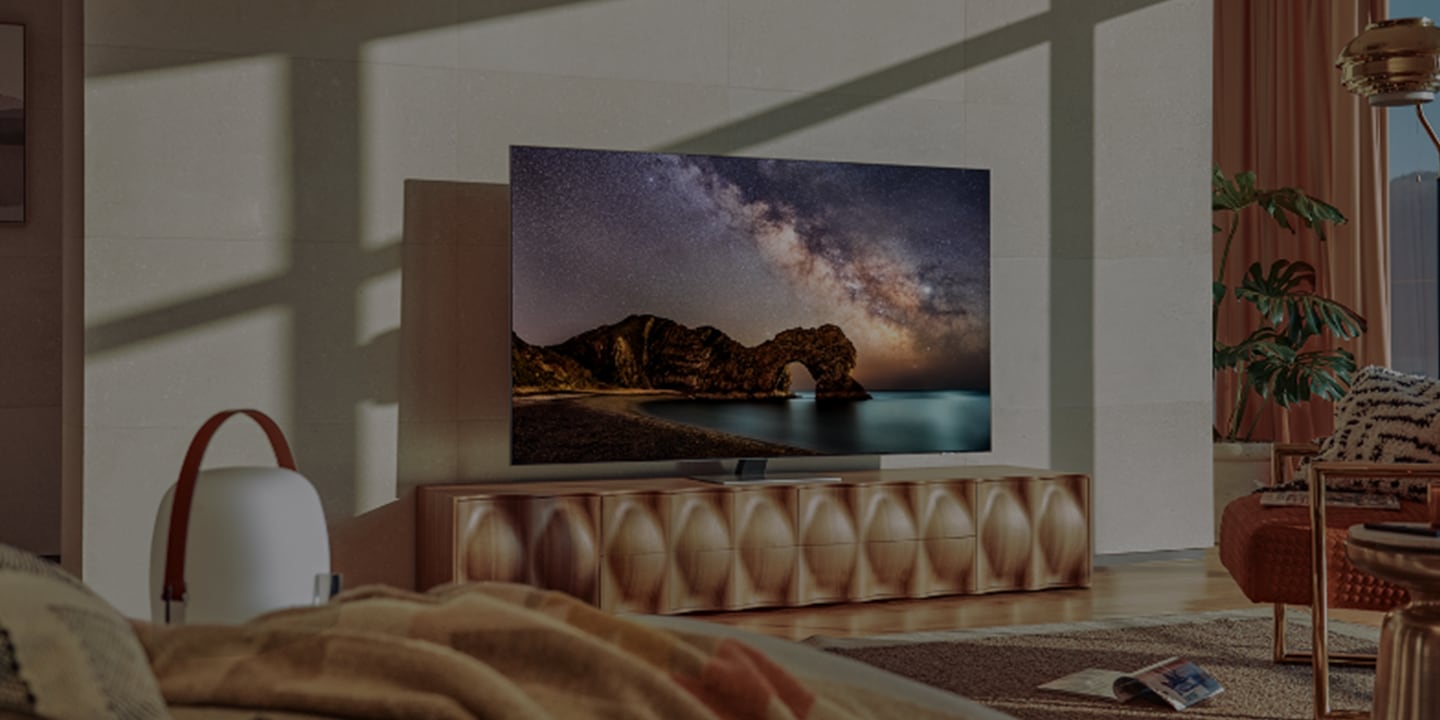
When it comes to shopping for a new Smart TV there’s certainly no shortage of choice - but with choice, comes decisions! And which display technology you opt for is a pretty big decision. How do you decide between an OLED, QLED, or even a Neo QLED display? How do they even differ? We’re here to help with our TV buying guide. We'll break down the acronyms and compare the latest display tech so you can determine which TV panel type is best for you. We’ll even throw in some recommendations for the best Samsung TVs along the way.
QLED vs OLED vs Neo QLED: Quick Takeaways
● Choose QLED for bright, vibrant viewing in any room.
● Step up to Neo QLED for more precise contrast and detail.
● Pick OLED for true blacks and a cinematic experience.
● Whichever you choose, you’ll get smooth motion and smart performance.
What does LED TV mean?
Let’s start with the basics. What is LED? LED stands for light-emitting diode and simply refers to the backlight that lights up your TV. But not all LED TVs are created equal - the technology around them varies, and so too will your picture quality. This is why OLED and QLED TVs are seen as superior displays. With standard LED TVs, you’ll find big differences not only in the number of LEDs but the quality of each LED. This can lead to big differences in colour, contrasts and the brightness of pictures you see on TV.
What does QLED mean?
QLED TVs use Quantum Dots, nanocrystals that emit precise colours based on their size, to enhance brightness, colour accuracy, and overall picture detail compared to standard LED TVs.
Interested to find out more about Samsung QLED technology? Check out our ‘What is QLED TV?’ guide.
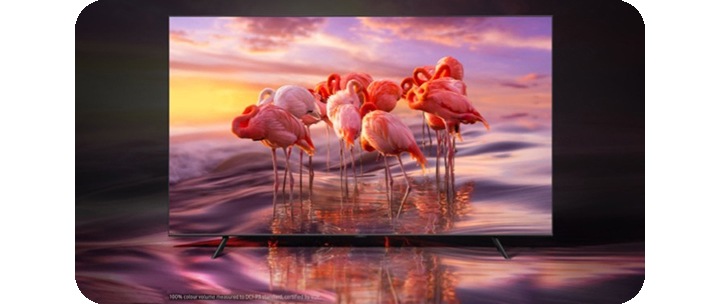
What does Neo QLED mean?
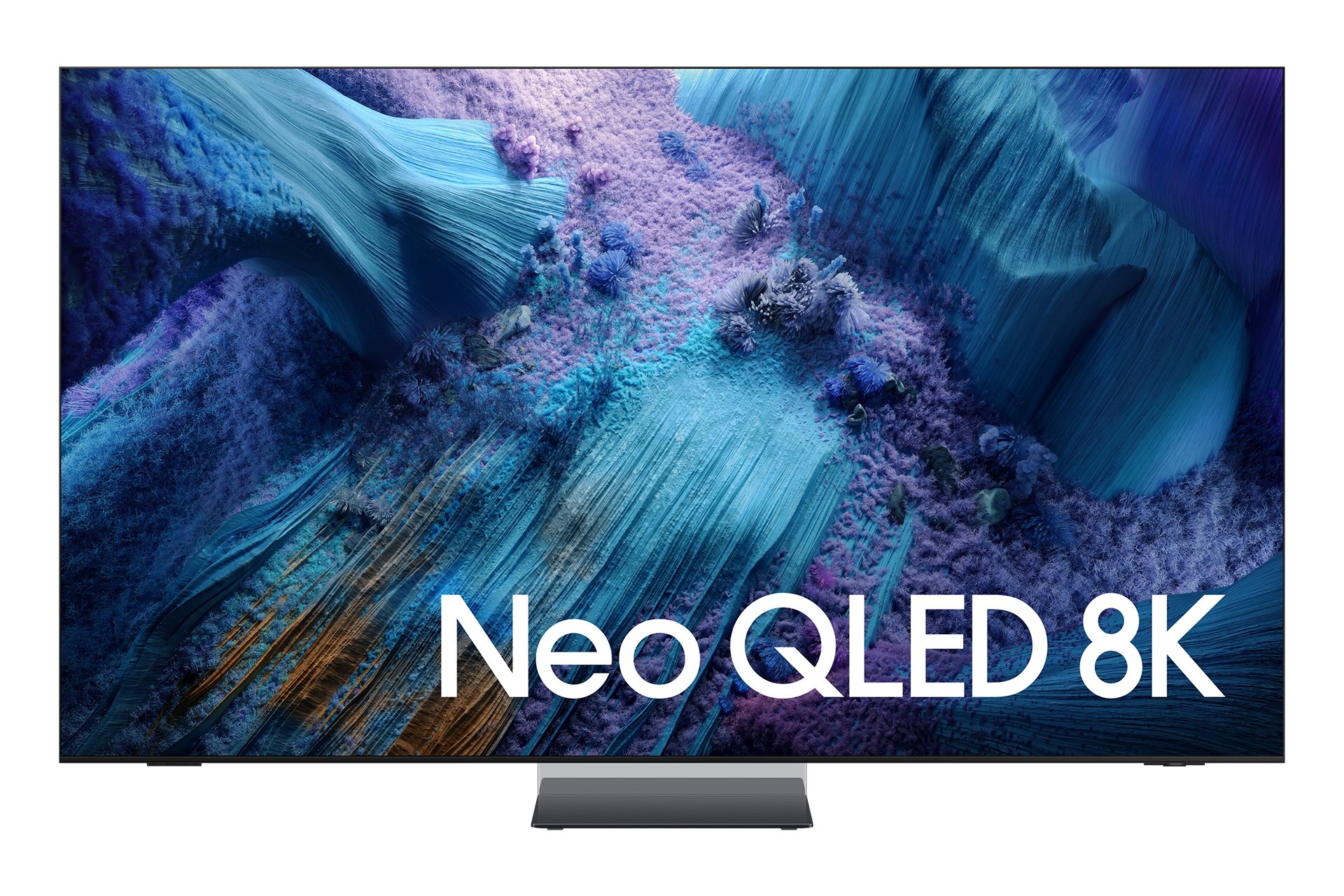
Neo QLED TVs use smaller Quantum Mini LEDs, allowing finer light control for higher brightness, deeper contrast, and more uniform picture quality.
Browse our range and find out more about Samsung Neo QLED TVs, including our latest ranges of Neo QLED AI TVs.


What is an OLED TV?
OLED stands for organic light-emitting diode. OLED TVs feature self-illuminating pixels that produce both light and colour individually, delivering true blacks, high contrast, and vibrant, accurate colours without a separate backlight.
Our range of Samsung OLED TVs delivers stunning 4K, browse our latest 4K Vision AI Smart TVs.


What is Samsung OLED?
Samsung OLED TVs boast our most advanced AI-powered processor, which works in real time to optimise picture and sound based on what you're watching, and where you're watching it - for the best possible viewing experience.
Neo QLED vs OLED: Which is better?
So, which is better when it comes to OLED or Neo QLED? Well, both come with their own unique benefits, so really it comes down to personal preference and what you value most out of a TV. Here is a quick rundown of how the two display technologies differ.
Colour
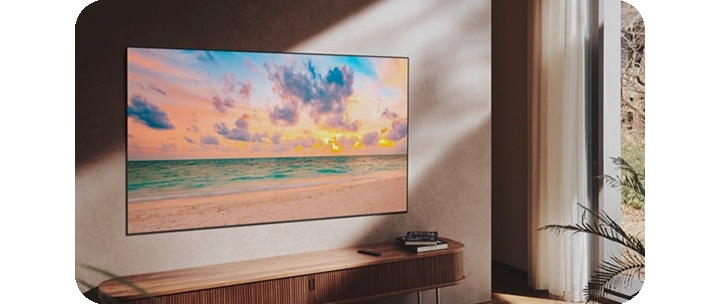
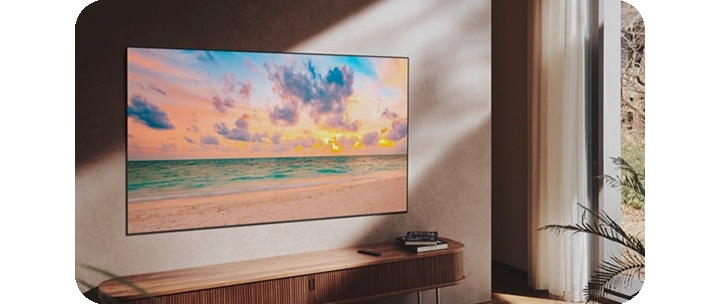
In truth, both OLED and Neo QLED displays have incredible colour accuracy, volume and brightness making them excellent choices. Each TV will have its own display specs. If you’re seeking a brighter image with a higher level of contrast between light and dark areas onscreen, it's worth looking for TVs that have a vast colour gamut (that is the spectrum of colours) and HDR technology. Neo QLED in particular have high HDR brightness levels and a wide HDR range. Why not check out the 2025 Neo QLED QN90F 4K Vision AI Smart TV? You will enjoy spectacular detail in every shot, exactly as you should. Whether it's gloomy shadows to sun-scorched scenes, the true-to-life colours make for a remarkable contrast.
Brightness
High brightness levels allow you to see more shades of colour and detail in the brightest and darkest scenes, and is particularly important when you're putting your TV in a brightly lit room. If you plan to have your TV in a darker room, an OLED display is a great choice as it will give you a great cinematic experience. Overall, however, LED TVs have an advantage here because the main backlight is made from powerful LEDs. Adding Quantum Dots into the mix means the brightness gets even better. That’s certainly not to say that OLEDs don’t get bright - they do. Take a look at our 2026 S95H OLED 4K Samsung Vision AI Smart TV. With OLED HDR Pro1, Motion Xcelerator 165Hz2 and the NQ4 AI Gen3 Processor3, this TV is optimised for everything from cinematic viewing to next-gen gaming.
1 The range of HDR luminance is based on internal testing standards and subject to change according to viewing conditions or specifications.
2 4K 165Hz is only available with PC connected content. Supports VRR/4K@120Hz.
3 Upscaling may not apply to PC Connection and Game Mode.
Contrast
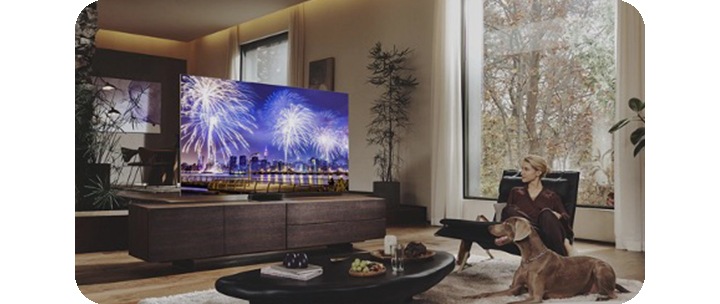
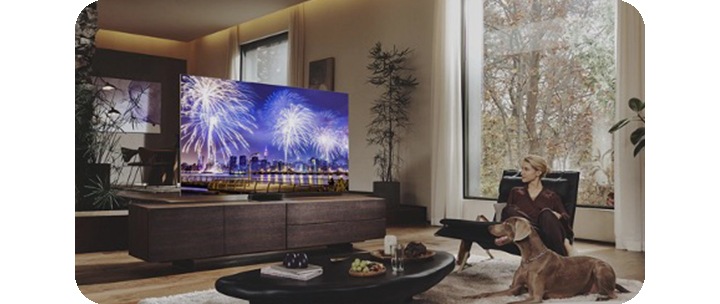
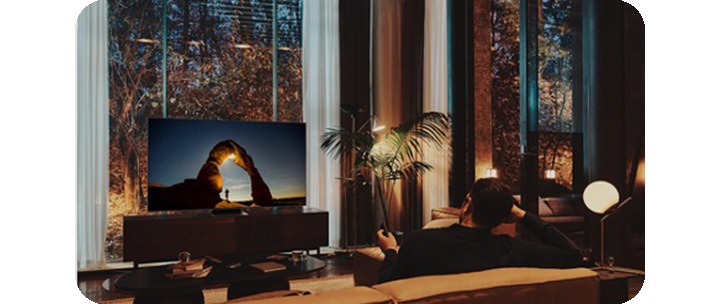
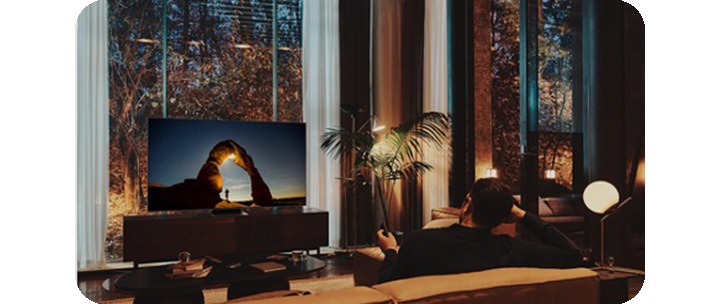
Black is black, right? Not always. When it comes to TV displays, there’s a wide spectrum of what’s considered black. True blacks allow for richer colours and greater contrast. OLED has the advantage here because an OLED pixel can turn on and off individually. If an OLED pixel isn’t getting any power, it doesn’t produce any light, so it is simply turned off to produce a ‘true’ black. However, let’s not underestimate our Neo QLED TVs. Thousands of Mini LEDs are precisely controlled by our advanced AI-powered processors to deliver deep blacks and higher brightness levels, that deliver incredible contrast ratios and a stunning picture no matter what.
Viewing angles
OLED comes out on top here and can be viewed at a wide range of angles without any reduction in image quality. In contrast, the best viewing angle for LED TVs is typically right in the middle. As you move to either side, the picture quality tends to diminish. However, Samsung’s innovative Ultra Viewing Angle with Anti Reflection screen, which many of our epic Neo QLED TVs benefit from, help combat this. This anti-glare TV screen absorbs reflections, meaning you can enjoy your favourite shows on the screen from anywhere in the room and without the sun or lights in the room getting in your way.


See how Samsung AI enhances picture and sound. Discover how Vision AI optimises every scene.


Is OLED or Neo QLED better for gaming?
When it comes to gaming, the display technology in your TV is important. It can impact whether you win or lose and we know for sure that no one likes losing! The key things to consider when choosing between an OLED or Neo QLED display for gaming are the response time, refresh rate, input lag and HDR brightness of the TV.
Refresh Rate
The refresh rate is important because it refers to how often the entire image on-screen changes. The faster the rate, the smoother things look, and the easier it is to pick out the finer details in fast-moving content. Many Samsung TVs have fast 120Hz refresh rates, which means the entire image is updated 120 times every second. The sensational QN80H and QN70H Neo QLED models, as well as the S95H and S90H OLED models, take things further with refresh rates up to 144Hz. What’s more, video games often use something called variable refresh rates (VRR), which means that the rate changes throughout the game. For the best gaming TVs, you’ll want one with VRR to avoid jerkiness and blurring in your game.


Response rate
The response rate refers to how long it takes for each pixel to change colour and brightness. With a faster response time, there’s less motion blur in action-packed games keeping you ahead of the game. OLED pixels can change incredibly fast because each diode works independently. Likewise, the Quantum Dots in QLED TVs are able to respond super quickly, so both the latest Samsung OLED and QLED TVs are a great choice here.


Input Lag
Input lag is the delay between pressing your controller and seeing a response on the screen. It links closely with response times and can be a problem if the TV display is slow at moving between images. As discussed above, OLED displays are highly responsive, so input lag normally isn’t an issue with these displays. However, if either an OLED or QLED TV has ‘Game Mode’ you’ll find no issue with input lag. Learn more about what Game Mode is in our guide.
We’ve curated a handy chart below to compare our three top picks for Samsung gaming TVs. Each TV has different display technology but is an exceptional gaming TV.


HDR brightness
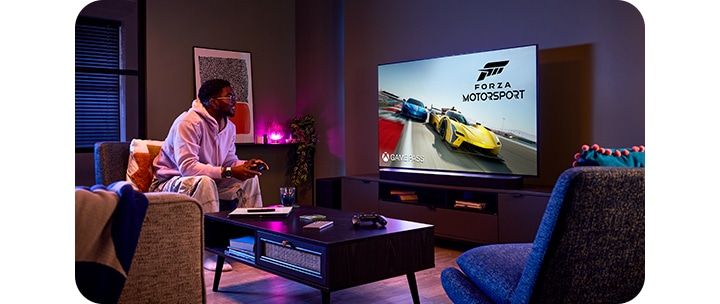
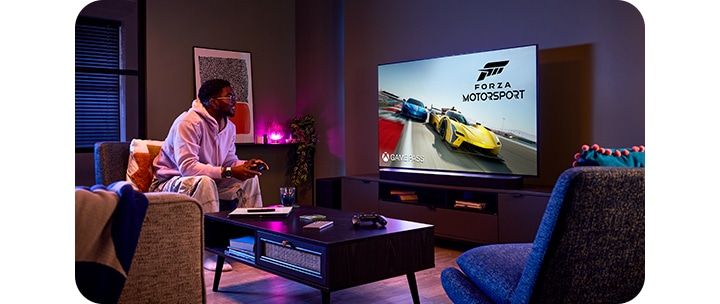
High HDR brightness levels allow you to see more detail in the brightest and darkest areas of the game. Samsung Neo QLED has the advantage here, making it a great option for gaming in a bright or well-lit room. Plus, the QLED range comes with a 10 Year Screen Burn warranty*, which means you can play without the worry of burn in. Whilst OLED models still get bright, they're better suited for gaming in darker environments.
*Register within 90 days. T&Cs apply.
*Register within 90 days. T&Cs apply.
| Picture Quality | |||
| Screen Size Options | 98/85/75/65 | 83/77/65/55 | 85/75/65/55 |
| Resolution | 8K (7,680 x 4,320) | 4K (3,840 x 2,160) | 8K (7,680 × 4,320) |
| Variable Refresh Rate | Yes | Yes | Yes |
| Processor | NQ8 AI Gen3 | NQ4 AI Gen3 | NQ4 AI Gen2 |
| Anti Reflection | Glare Free Technology | OLED Glare Free*** | Anti-Reflection Technology |
| Game Features | |||
| Refresh Rate | 100Hz (Up to 4K 240Hz) | 100Hz (Up to 165Hz) | 4K (3,840 x 2,160) |
| AI Auto Game Mode | Yes | Yes | Yes |
| Dynamic Black EQ | Yes | Yes | Yes |
| Super Ultra Wide Game View | Yes | Yes | Yes |
| Object Tracking Sound | Object Tracking Sound Pro | Object Tracking Sound Plus | Object Tracking Sound Lite |
| Gaming Hub | Yes | Yes | Yes |


Want to find out more? Check out our 'Best TV for gaming' guide which has everything you need to know about buying a new Samsung TV optimised for epic gaming.
- *4K 144Hz is only available with PC connected content. Supports VRR/4K@120Hz as specified in HDMI 2.1.
- **4K 240Hz is only available with PC connected content. Supports VRR/4K@120Hz/8K@60Hz as specified in HDMI 2.1.
- ***Measured against Unified Glare Rating (UGR) testing standard, validated as 'OLED Glare Free' by UL.
Explore our TV buying guide for hints and tips about finding the best Samsung TV for you.
FAQ Schema
YouTube Video Schema
FAQs
-
Do OLED TVs last longer than QLED TVs?Both OLED and QLED TVs are designed to provide many years of reliable performance under normal viewing conditions. Modern OLED TVs include advanced technology to manage pixel performance over time, and both technologies are built to deliver long-lasting picture quality.
-
Is OLED or QLED better for watching movies?OLED and QLED TVs both deliver an excellent movie-watching experience. The best choice often depends on the lighting conditions in your viewing space and the type of picture performance you prefer. OLED TVs are known for their ability to produce deep blacks and precise contrast, which can enhance cinematic scenes in darker environments, while QLED TVs offer very high brightness and vibrant colours, helping movies look clear and dynamic even in brighter living rooms.
-
Which TV technology is thinner: OLED or QLED?OLED TVs are typically thinner than QLED TVs because they do not require a separate backlight layer, although many modern QLED models are still designed with sleek and slim profiles.
-
Which TV technology is more energy efficient: OLED or QLED?Both technologies are engineered to meet modern energy-efficiency standards while providing high-quality picture performance. OLED TVs can be efficient when displaying darker scenes because individual pixels can turn off completely when not needed. QLED TVs use a backlight system designed to deliver strong brightness and consistent performance across different types of content.
-
Which TV technology is better for sports: OLED or QLED?Both OLED and QLED TVs are well-suited for watching sports thanks to their fast refresh rates and motion-handling capabilities. OLED TVs provide excellent motion clarity and contrast, helping fast-moving action appear smooth and detailed, and QLED TVs offer high brightness and vibrant colours, which can make live sports stand out in bright viewing environments.
Need fast answers to your TV questions? Jump to any quick-tip article below:

Smarter Service
Instant advice from the experts who know Samsung best.

Free 14 Day Returns
If you don’t love it, return it.

Flexible Finance
Spread the cost to suit you.

Next Day Delivery
Order by 7pm for mobile or 3pm for anything else.
*Samsung Account required to access our network-based smart services and apps. If you choose not to log-in, you will only get connection to terrestrial TV (applicable to devices with tuners only) and external devices, e.g. via HDM
